Jul 20, 2015

California taxis can sue Uber over ads claiming safer service, judge rules

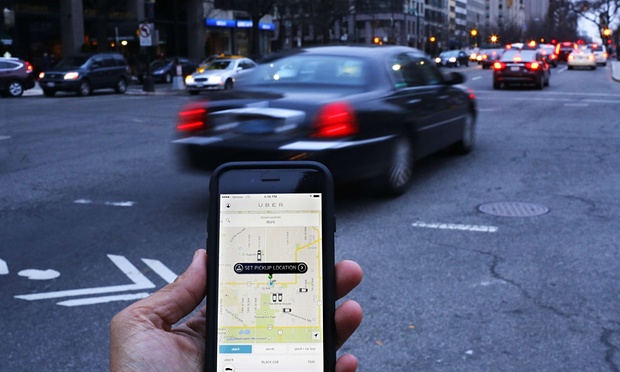
Taxicab companies can sue Uber over its advertising claims, a judge has ruled. Photograph: Andrew Caballero-Reynolds/AFP/Getty Images
A federal judge has ruled California taxicab companies can sue competitor Uber over advertising statements that it offers the safest rides on the road.

The San Francisco Chronicle reports that taxicab companies accused the ride-hailing company of false advertising for stating in ads and online postings that its background checks were the most thorough and its services the safest in the business. The statements implied, and sometimes explicitly declared, that conventional taxis were less safe.

Taxi companies say their review of prospective drivers is far more thorough. They say they use fingerprint checks and government criminal records that Uber does not employ and require their drivers to take a driver safety course and a written exam.

US district judge Jon Tigar of San Francisco rejected Uber’s attempt to dismiss the suit on Friday and said much of it could proceed.

Jul 6, 2015

Eurozone struggles to find joint response to Greek referendum

Chancellor Angela Merkel and President François Hollande after a crisis meeting in Paris. Photograph: Etienne Laurent/EPA
 Greek banks are to remain closed until Thursday at the earliest, it was announced, with ATM withdrawals rationed to €60 daily.

“The prospects of a happy resolution of this crisis are rapidly diminishing,” said the British chancellor, George Osborne, after speaking to some of the key policymakers. “If there is no signal from these meetings that Greece and the eurozone are ready to get around the table again, we can expect the financial situation in Greece to deteriorate rapidly.”

The commission had nothing positive at all to say about Sunday’s Greek referendum, while Germany’s increasingly hardline social democratic leader, Sigmar Gabriel, warned that Greece was on the brink of insolvency.

He accused Tsipras, the radical leftist prime minister who outmanoeuvred the rest of the eurozone with his plebiscite, of ruthlessly pursuing the Greek national interest at everyone else’s expense. His message suggested a Grexit was now inevitable as he stressed the need for EU humanitarian programmes to forestall social implosion in Greece.

Tsipras is expected to table new bailout proposals on Tuesday to eurozone leaders meeting in Brussels after he ditched the flamboyant Varoufakis. Over five months of negotiations, Varoufakis, a leftwing economist and neophyte politician, has rubbed his interlocutors up the wrong way, persistently arguing he is right and everyone else is wrong when it comes to dealing with the Greek debt crisis.

The detail of Sunday’s voting patterns left no doubt about the devastating verdict and the challenges it now presents to Europe’s leaders. Around 80% of voters under the age of 34 voted no on Sunday.

Germany’s Gabriel said the Greeks had simply rejected the single currency rules, while Matteo Renzi, the Italian prime minister, delivered a cri de coeur lamenting the desperate situation the eurozone and the EU now found themselves in.

“Two political building sites need our work urgently, in European capitals and in Brussels,” he said. “If we stand still, prisoners of rules, regulations, and bureaucracy, Europe is over. Reconstructing a different Europe will not be easy … The first one is Greece, a country in very difficult social and economic conditions. Meetings tomorrow will have to indicate a conclusive solution to this emergency.”

Merkel has taken a hard line with Greece since Tsipras announced his snap referendum 10 days ago, while the French have been much more accommodating towards Athens. A brief statement issued after the leaders had dined together on Monday evening showed little sign of the two main EU leaders bridging their differences.

There were no signs either of movement from the eurozone towards the main demands from Athens – a new deal writing down the Greek debt mountain, as urged last week by the International Monetary Fund.

German government sources said there would be no debt reduction measures offered and that it was up to Greece, which ended negotiations with its creditors 10 days ago and called the referendum, to make the next move.

“In light of the decision by the Greek citizens, the conditions to start negotiations on a new aid programme are not met yet,” said Merkel’s spokesman, Steffen Seibert.

Valdis Dombrovskis, the most senior European commission official in charge of the euro, said the referendum result risked leaving everyone a loser. “The no result unfortunately widens the gulf between Greece and other eurozone countries … There is no easy way out of this crisis. Too much time and too many opportunities have been lost.”

A day of frantic politicking in Greece, and internationally, left few clues as to what happens next. Tsipras has persistently surprised and out-manoeuvred his opposite numbers, but without securing any net gains for a country in the throes of financial collapse. Greece’s bank holiday and the rationing of ATM withdrawals to €60 a day was extended until at least Thursday.

The country’s banks are entirely dependent on the European Central Bank to keep standing and last night the ECB toughened it stance towards Greece’s banks by demanding they put up more collateral in return for the emergency liquidity allowance which has been keeping them afloat. The ECB said its government council is “closely monitoring the situation in financial markets and the potential implications for the monetary policy stance and for the balance of risks to price stability in the euro area”.

Tsipras spent much of the day with other Greek party leaders, resulting in the five-party national consensus behind his negotiating strategy committed to debt restructuring. Tsipras’s leftwing Syriza, and his rightwing nationalist coalition partner, Anel, were joined by centre-left Pasok, liberals To Potami, and centre-right New Democracy.

Tsipras’s ‘new’ proposals are likely to lean heavily on his recently tabled third bailout ideas, which call for €29bn in new loans over a two-year period under the eurozone’s ESM permanent bailout fund, combined with a debt swap that would see the ESM buy up Greece’s obligations to the European Central Bank and convert this into longer-term loans at cheaper rates. Greece would have to commit to many of the austerity measures that were roundly rejected by voters on Sunday.

Gabriel, however, emphasised the problems of devising a new bailout under the ESM, whose rules are more exacting than those for the eurozone instrument used for the previous bailouts since 2010.

The ESM rules say that a bailout can be considered for a eurozone country if its financial plight imperils the stability of the euro area as a whole. Many argue that this is not the case with Greece, that there is little risk of contagion and destabilisation of the broader currency area. But no one really knows.

Jun 15, 2015

EU states agree framework for pan-European data privacy rules

All 28 member states of the Council of the European Union have to agreed to new European data protection laws that could see tough new regulations unified across the whole of the EU.
The changes would allow for a pan-European framework for privacy and the handling of European citizens’ data, instead of the current scenario where data privacy is regulated by watchdogs in the country of operation within Europe such as Ireland.
The changes were put forward by the European commission three years ago and form a crucial step towards a single digital union. The European parliament filed its agreement in principle over a year ago, but the Council of the European Union, where each country’s government has representation, has struggled to come to agreement.
Latvia’s minister for justice, Dzintars Rasnačs, said: “Today we have moved a great step closer to modernised and harmonised data protection framework for the European Union.”
The agreement comes in the last week of Latvia’s presidency of Council of the European Union. The negotiations going forward will be the responsibility of Luxembourg as it takes over the presidency of the council.
Monique Goyens, director general of the European Consumer Organisation said: “EU laws are now lagging behind the pace of technologies and business practices. Our personal data is collected, then used and transferred in ways which most consumers are oblivious to. An appropriate update must put control of personal data back in the hands of European consumers.”
Employees leave the Google Inc. European headquarters in Barrow Street, Dublin, Ireland
“This new regulation is the opportunity to close gaps, ensure robust standards and stipulate that EU laws apply to all businesses operating here.”
While some welcome clearer and more unified rules and regulations, lobbying, which has delayed proceedings, has shown that some aspects of the proposal have companies worried.
Of particular contention is a clause that would allow users to sue companies who process data, such as cloud storage providers, as well as those that own it or collect it. Companies including Amazon and IBM have warned that it could kill off Europe’s cloud computing industry.
Many US technology companies have based their European operations in Ireland, including Facebook and Google. Current laws mean that if one data protection authority clears a company’s actions and regulates compliance with local laws, informed by European law, that company can then operate in any European member state without the need to clear its actions in each country.
The EC put forward new regulation that would toughen European law, which would in turn toughen data privacy laws in European nation states. But the proposal could also see the formation of a single nominated authority that could rule on large or politically contentious data protection issues.
Facebook and Google are subject to both legal and regulatory challenges over data privacy. The latest action is a lawsuit from the Belgian privacy commission which deemed that because Facebook operated an office within its country could answer to its regulation not just Ireland’s data protection authority where it is headquartered.
“I am very content that after more than three years of negotiations we have finally found a compromise on the text. The new data protection regulation, adapted to the needs of the digital age, will strengthen individual rights of our citizens and ensure a high standard of protection,” said Rasnačs.
The agreement will lead to a “trilogue” beginning next week between the EC, the European parliament and the Council of the European Union on each of their amendments to the EC’s proposal.
Deputy commissioner from the Information commissioner’s office David Smith said: “It is encouraging that these discussions are scheduled to start next week, though it is likely to be well into next year before they are completed. We can then expect a further two years before any law is implemented, to give people time to prepare for the changes.”
How tough the new laws and regulation becomes will be up for debate. The idea of a single data regulator - a one-stop-shop - for large issues has been popular in theory. What form that would take will be crucial for companies such as Facebook and Google operating in Europe.
Under scrutiny are proposals regarding: unambiguous consent for any data collection, such as tracking for adverts; limits to the ability to use data for purposes other than those for which it was collected, such as profiling; and a strengthened “right to be forgotten”.
The Council of the European Union has agreed new fines for breaches of EU privacy and data protection law could be up to €1m or 2% of the company’s global annual turnover. The European parliament would have them as high as €100m or 5% of turnover.

Apr 13, 2015

Gender imbalance in tech sector must change for startups to thrive

“It’s not OK not to understand the internet anymore,” said Martha Lane Fox during her recent Richard Dimbleby Lecture broadcast live on the BBC. During the speech, the tech champion attacked the UK’s digital divide, the lack of understanding of the internet among UK politicians and the under-representation of women in technology companies. In her opinion, what is needed is a new institution – she suggests the name doteveryone.org – which could tackle these problems head on.
“Let’s create a new institution and make Britain brilliant at the internet. We need a new national institution to lead an ambitious charge – to make us the most digital nation on the planet,” she said.
Across the country, entrepreneurs took note of Lane Fox’s words. She was one of the leading lights of the first wave of dotcoms, creating Lastminute.com, along with Brent Hoberman. She remains an inspirational figure for many business people, particularly women working in the tech space. Among these is Jess Butcher, co-founder of “augmented reality” app maker Blippar, who says: “Martha’s comments around the lack of women in technology particularly resonate as, like her, I feel that technology suffers from a monumental diversity problem which negatively effects both the culture and the output of the sector.”

Lane Fox says she wants to put women “at the heart of the technology sector”. She says sexism is rife in the technology and investment industries – she experienced it firsthand when she was fundraising for Lastminute.com. One investor, apparently more interested in her personal life than the revolution she was spearheading, bluntly asked: “What happens if you get pregnant?”
For Jess Stephens, chief marketing officer at cloud messaging service SmartFocus, such attitudes are all too common. “I would go out on a limb and say that every woman who works in the tech industry has an anecdote similar to the story that Martha Lane Fox used at the start of her lecture. Inappropriate remarks based on your gender are par for the course and represent obstacles that you must overcome as woman in the tech world,” she says.
But if the gender imbalance in the tech industry is to be addressed by the creation of a new institution, what methods should it employ? Entrepreneur and investor Mark Pearson, who founded and sold MyVoucherCodes.co.uk, says he welcomed much of Lane Fox’s speech, but he is concerned that doteveryone.org would employ positive discrimination, which he feels is counterproductive. “No single group should be at the ‘heart’ of it,” he said. “I have twins – a boy and a girl – and I want each to grow up as ambitious and unafraid to succeed as the other. The UK won’t be brilliant at the internet until we stop trying to implement quotas and genuinely celebrate and insist upon the best from the next generations.”

The importance of addressing skills shortages was stressed throughout Lane Fox’s speech and there is little doubt that the UK has a problem. A recent report suggested the UK needs an extra 150,000 workers with digital skills every year and demand only looks set to increase.
Business owners struggling to find staff could hardly agree more with Lane Fox on this point. Jack Bedell-Pearce, managing director of data centre company 4D-DC, says he regular faces the challenge of hiring good staff: “As an employer, we’re still not seeing the relevant skills filtering through from schools and universities. We need kids with a basic knowledge of coding, networking and server infrastructure development.
lane fox
“It sounds daunting but the earlier you get them thinking about IT not as a social media experience, but in terms of code, networks and connected servers, the sooner they will understand the potential of the internet.”

But the creation of a body, which is presumably publicly funded, raises many questions. Lane Fox avoided laying out a clear blueprint for doteveryone.org, although she did suggest an organisation that was entrepreneurial at heart and far removed from the culture of a government quango.
Laurie Wang, founder of women’s tech entrepreneur group W Kollective, believes this is the right way to do it. “To maximise the institution’s potential, I believe it should be innovative, adaptable and have an open architecture. Very similar to how a startup would be run, in fact, fostering the flow of creative ideas with the flexibility to adapt to the constantly evolving digital landscape,” she says.

Lane Fox expressed considerable concern about the ability of politicians, whose “lack of knowledge breeds fear”, and who are regularly haunted by the words “Government. IT. Failure”. The failure of government to get things right with IT projects leads many in the business world to wonder if a public body is the right approach.

Joe Mathewson, founder of education tech firm Firefly, says the UK internet industry doesn’t need more quangos or government institutions. “For Britain to be better on digital and for British companies to challenge the American heavyweights, we need a fundamentally non-governmental solution,” he says. “We need to create a commercial environment which encourages entrepreneurs, from school age and above, that supports digital businesses and helps them grow.”

The UK has a strong startup scene, but in global terms it lacks big hitters. Lane Fox said among the top 100 visited websites in the world, there’s only one from the UK – the BBC – which comes in at number 74. So what, then, are the chances the UK can, in Lane Fox’s words, “leapfrog every nation in the world and become the most digital, most connected, most skilled, most informed on the planet”? There are many big challenges to overcome, but most entrepreneurs believe a combination of education, greater inclusion and entrepreneurial spirit are the way forward.

However, some argue that it’s not just a matter of inspiring schoolchildren and hoping things will trickle through. Richard Rolfe, co-founder of National Coding Week, worked as a teacher until his early 50s but subsequently taught himself to code and now works with adults to help them do the same.
Rolfe says: “It is a myth that the internet, digital skills and the world of tech belong to the youngsters. There are plenty of entrepreneurs and digital professionals who have adapted to the digital revolution, but there are many who think that digital skills are hard to learn.
“If her plan is to succeed, it needs to genuinely reach out to and embrace people of all ages, all members of society.”
Sign up to become a member of the Guardian Small Business Network here for more advice, insight and best practice direct to your inbox.
Mar 10, 2015

Prudential's Tidjane Thiam to take top role at Credit Suisse

Tidjane Thiam will now take over at Credit Suisse.
Tidjane Thiam is quitting as chief executive of Prudential to take the top post at banking group Credit Suisse.
The FTSE 100 insurer confirmed the end of Thiam’s five-year stint as chief executive of the group on Tuesday morning along with its annual results announcement.
Thiam is highly regarded in the City despite a sometimes-bumpy reign at Prudentialwith criticism from shareholders over a failed $35.5bn (£23.5bn) takeover bid for the Asian life assurance division of AIG in 2010 and personal censure from the City regulator over the collapsed deal.
However, his success in building the insurer’s position in Asian markets has tripled the company’s share price since he became chief executive in October 2009.
Describing Thiam as “one of the most exceptional leaders” in the Prudential’s history, chairman Paul Manduca said that while the board were sorry to see him go, they “understand his desire to take on a new challenge with another global leader in a different part of the financial services sector”.
Thiam will be replacing Brady Dougan, who became chief executive of Credit Suisse in 2007 and steered the bank through the financial crisis. However, Dougan’s position came under pressure last year when Credit Suisse pleaded guilty to charges that it helped American citizens evade taxes, becoming the first bank in more than a decade to admit to a crime in the US.
Credit Suisse also agreed to pay $2.6bn as part of the settlement, as Dougan blamed the scandal on a small number of Switzerland-based bankers who “skirted the bank’s controls”.
Dougan’s successor also faces challenges over the bank’s presence in investment banking – an area in which Swiss rival UBS has scaled back sharply – and a $10bn lawsuit over the sale of mortgage-backed securities before the 2008 financial crisis.
Nonetheless, Thiam’s career before Prudential indicates that taking over a national institution such as Credit Suisse will not intimidate the chief executive.
In 1999, while serving as cabinet minister in Ivory Coast, where he was born, Thiam was put under house arrest during a military coup. “I had no job, no career, nothing at all … If you’ve been in a situation where you have nothing there’s nothing much you’re afraid of,” he told BBC Radio 4’s Desert Island Discs in 2012.
Thiam was mostly educated in France and graduated top of the class from the École Nationale Supérieure des Mines de Paris, a training ground for France’s political and business elite.
Once he graduated, Thiam followed a familiar path for corporate high-fliers, working at US management consultancy McKinsey and the World Bank before returning to Ivory Coast and joining the government in 1998. He then joined McKinsey again in Paris and was recruited by insurance group Aviva, where he came to the notice of Prudential as the head of Aviva’s European business.
As well as receiving the backing of the City, Thiam has been courted by politicians. He has served on the former prime minister Tony Blair’s Commission for Africa and has picked up a Légion d’Honneur, the equivalent of a knighthood, from the French government.
Mike Wells, the head of Prudential’s US operations, is widely expected to replace Thiam at the Pru. Manduca said on Tuesday that a successor had been identified and would be announced once the regulatory approval process has been completed.

Feb 5, 2015

Greek and German finance ministers clash at debt relief talks

Greece’s radical Syriza government remained locked in a bitter standoff with its German paymasters, as finance minister Yanis Varoufakis issued a stark warning of the rise of nazism in his country if the eurozone fails to heed the democratic voice of Greek voters.
As Varoufakis completed the last leg of a whistle-stop round-Europe tour to seek support for Syriza’s plans to halt austerity and renegotiate the country’s debts, he told a tetchy press conference on Thursday in Berlin that Greece had a proud record in fighting Nazis, but ignoring the clear message from Greek electors could feed far-right forces.
“No one understands better than the people of this land how a severely depressed economy, combined with a ritual national humiliation and unending hopelessness, can hatch the serpent’s egg within its society. When I return home tonight, I will find a country where the third-largest party is not a neo-nazi party, but a nazi party,” he said, referring to the far-right Golden Dawn. “We need the people of Germany on our side.”
However, Wolfgang Schäuble, his German counterpart, maintained that Greece must be held responsible for its own problems, saying: “We have to appreciate their efforts and their situation, and above all we have to appreciate the progress that has been achieved in Greece over recent years. At the same time, however, we must say that the reasons, the cause for the difficult journey to be undertaken by Greece, that the reason for this is to be found in Greece, and not outside Greece, and definitely not in Germany.”
Schäuble repeated an earlier offer to send 500 German tax collectors to help the Athens government collect taxes from wealthy Greeks.
He then told reporters he and Varoufakis had “agreed to disagree”, but the Greek said they had not even got that far: “We did not reach agreement because it was never on the cards that we would.”
Greece and Germany are on the frontline in a fierce battle about the future of European economic policy, with Syriza determined to show that ditching austerity is a better recipe for economic recovery than relentless cuts, and Germany determined to make Athens stick to the deficit-cutting agenda – and pay back the €240bn (£180bn) in bailout loans it received from the international community.
Advertisement
As Varoufakis returned to Athens , thousands of people gathered on the streets to show solidarity in the party’s battle with Greece’s creditors.
The fresh outpouring of public concern, with protesters gathering in Syntagma Square, the centre of anti-government riots during repeated crises in recent years, came after the European Central Bank outraged policymakers by restricting access to emergency funds for Greece’s struggling banks.
In Berlin, Varoufakis promised to meet the alarmist warnings of some in the eurozone about the consequences of Syriza’s radical policies with “a frenzy of reasonableness”.
Just before the Berlin meeting the Russian president, Vladimir Putin, had ratcheted up the pressure on the eurozone to find a solution to the crisis by inviting the new Greek prime minister, Alexis Tsipras, to talks in Moscow in May.
Schäuble said Germany would “fully respect the mandate” handed to Varoufakis and his colleagues by the electorate in the general election last month, but Germany had its own democratic pressures.
German public opinion is deeply sceptical about the need for fresh debt relief for Greece, after repeated bailouts since 2010. But Syriza argues that it has been burdened with a series of impossible-to-repay loans, and has seen growth hobbled by the austerity imposed as a quid pro quo.
Back in Athens, Tsipras told the Greek parliament: “Greece is no longer the miserable partner who listens to lectures to do its homework. Greece has its own voice.” Protesters on the streets held up placards saying “People Before Markets”.
Syriza and its coalition partners had hoped to receive temporary support from the ECB while it holds debt restructuring talks with its creditors, but Wednesday’s decision by the Frankfurt-based bank, which tightened the rules on the collateral Greek banks can post in exchange for loans, made the prospects of short-term support appear bleak.
As fears mounted of a fresh run on Greek bank deposits – one of the factors that led to the country’s previous financial bailouts – central bank governor Yannis Stournaras said: “The ECB’s decision can be taken back if there is a deal from the Greek government. Deposits and liquidity are absolutely safe.”
Greece’s bailout from the troika of the European commission, International Monetary Fund and the ECB – which came with stringent conditions, including hefty spending cuts – is due to expire at the end of the month. Syriza insists it will not accept an extension which would, it says, be tantamount to agreeing to a new bailout with foreign lenders..
Finance chiefs can’t agree to disagree over Athens’ debts as Varoufakis brings up spectre of Greek nazism and Schäuble offers 500 German tax collectors

Jan 10, 2015

Apple will raise iOS app prices in next 18 hours (unless you're in Iceland)

App Store prices are set to rise with little notice.
App Store prices are set to rise with little notice. Photograph: Alamy
Apple is implementing a blanket price-increase on the App Store in the EU and Canada, the company has said in an email to developers.
Without specifying what the new tiers would be, the company told developers that “prices on the App Store will increase for all territories in the European Union as well as in Canada and Norway, decrease in Iceland, and change in Russia. These changes are being made to account for adjustments in value-added tax (VAT) rates and foreign exchange rates.”
Apple also fails to give a specific time as to when the increases would hit the store, saying only that it would be “within the next 36 hours”, a timeframe that ends at 11am Friday morning.
The increase is likely linked to a new pan-EU policy which requires the company to deduct VAT based on its rates at the customer’s location, rather than the company’s. Since Apple’s European headquarters are nominally in the low tax jurisdiction of Luxembourg, that represents an increase in VAT for many users. Until now, that increase had eaten into developers’ margins, rather than be passed on to consumers, but that seems about to change.
Developers don’t have the option to pick any price they want for Apps on the store, instead being limited to a series of tiers which are linked across nations. The cheapest apps are currently $0.99, €0.99 and £0.69 (the latter two prices converting to $1.17 and £1.04 respectively), with prices increasing at different rates from there: a doubling in dollars to $1.99 more than doubles the British price, to £1.49 ($2.25), and less than doubles the European price to €1.79 ($2.12).
With the cost set to increase, the discrepancy between European and American prices will only grow. Users with a wish-list of apps to download can sneak in ahead of the price rise if they hurry, although how much they save will only become clear after the fact.
For Russian app store users, the prices are only going to “change”, rather than “rise”, suggesting Apple will be fiddling with some of the tiers in response to the country’s significant currency devaluation in recent months.
Apple did not respond to requests for comment.