UNIVERSITI Tunku Abdul Rahman (Utar) is once again teaming up with JobStreet.com by launching a JobStreet Corner at its Kampar Campus.
Utar president Prof Datuk Dr Chuah Hean Teik said the university has a long-standing relationship with JobStreet.com, having, conducted various joint research projects since 2010.
"It is due to the assistance and support of industry partners like JobStreet that Utar has become what it is today.
"For instance, because of the support from several stakeholders, Utar was ranked in the Top 111-120 of the Times Higher Education Asia-Pacific University Ranking 2018," he said.
"I have faith that the ambassadors would be able to collaborate with JobStreet to benefit both organisations.
"This programme not only enables ambassadors to build character but also to develop skills through trainings provided by JobStreet.com," he said.
"Student ambassadors can also help their friends register for a JobStreet account and give advice about employment processes as well as career choices," he added.
JobStreet.com Regional Senior Manager Dominic Wong said they are happy to work with Utar in developing industry-ready graduates through the joint programmes.
"All student ambassadors were trained in the JobStreet.com workshop which was designed to help them assist other undergraduates to be more job market ready. The workshop also deepens the student ambassadors’ knowledge on the job market dynamics, leadership skills and how to conduct resume clinics," he said.
"We look forward to other collaborations in the future with Utar to help students be more career-ready as well as ultimately bridge the employments gaps in Malaysia,"
Presently, more than 51,000 Utar graduates have registered with JobStreet.com.
Jul 18, 2018
Jun 25, 2018
Editorial: Trump can't stop cooperation on climate change
President Donald Trump's sorry record of ignoring and belittling the enormous challenge of climate change has slowed progress toward solutions.
America needs broad and sustained action to cut carbon emissions into the atmosphere, which trap heat and warm the planet.
Though the president has ceded leadership on the important issue to Europe, China and other nations, a bipartisan group in Congress is trying to find consensus around a plan for action.
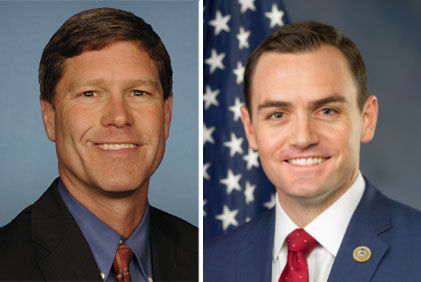
This includes two Wisconsin congressmen — Reps. Mike Gallagher, R-Green Bay, and Ron Kind, D-La Crosse — who are part of the 82-member Climate Solutions Caucus. By design, the group is evenly split between Republicans and Democrats. Its goal is to "educate members on economically viable options to reduce climate risk and protect our nation's economy, security, infrastructure, agriculture, water supply and public safety."
That sounds encouraging.
Lots of Democrats going back to former Vice President Al Gore have highlighted scientific warnings about global warming for decades. Now a growing number of Republicans have joined the cause. That includes U.S. Sen. John McCain, R-Ariz., who stressed the need for action during his unsuccessful bid for president a decade ago.
More recently, Republican Jeb Bush favored an international agreement to lower emissions during his 2016 bid for president. And last year, James Baker and George Schultz — former Cabinet secretaries under President Ronald Reagan, outlined their proposal for a revenue-neutral carbon tax.
Swift and serious action is going to require support from both political parties.
The private sector also is stepping up to help find remedies that make environmental and economic sense. The Alliance for Market Solutions, for example, includes business executives whose goal is to "build the conservative case for a clean-energy future." The group proposes a tax on carbon in exchange for less government regulation to encourage innovation.
In a front-page story last week, the State Journal marked 30 years since NASA's top scientist warned Congress and the world that global warming had already arrived. Since then, average temperatures have climbed, and extreme weather has increased. The risk to lives and property is enormous.
One popular priority the Climate Solutions Caucus should embrace is greater investment in scientific research. America should be leading the search for clean energy breakthroughs, not waiting for other nations to discover the future.
Another way to impose a tax on carbon emissions without hurting ordinary people is to steer the revenue back to the public, perhaps in the form of a rebate or tax credit that's based on carbon use. The less carbon burned, the bigger the check or credit. Making sure any carbon tax is "revenue neutral" — so the proceeds from any tax doesn't turn into a slush fund for unrelated government spending — is the best way to build support.
From melting glaciers to bleaching coral reefs to more floods and wild fires, the effects of climate change are becoming more evident. Our nation must pull together to pursue climate solutions for the sake of our children and grandchildren.
America needs broad and sustained action to cut carbon emissions into the atmosphere, which trap heat and warm the planet.
Though the president has ceded leadership on the important issue to Europe, China and other nations, a bipartisan group in Congress is trying to find consensus around a plan for action.
This includes two Wisconsin congressmen — Reps. Mike Gallagher, R-Green Bay, and Ron Kind, D-La Crosse — who are part of the 82-member Climate Solutions Caucus. By design, the group is evenly split between Republicans and Democrats. Its goal is to "educate members on economically viable options to reduce climate risk and protect our nation's economy, security, infrastructure, agriculture, water supply and public safety."
That sounds encouraging.
Lots of Democrats going back to former Vice President Al Gore have highlighted scientific warnings about global warming for decades. Now a growing number of Republicans have joined the cause. That includes U.S. Sen. John McCain, R-Ariz., who stressed the need for action during his unsuccessful bid for president a decade ago.
More recently, Republican Jeb Bush favored an international agreement to lower emissions during his 2016 bid for president. And last year, James Baker and George Schultz — former Cabinet secretaries under President Ronald Reagan, outlined their proposal for a revenue-neutral carbon tax.
Swift and serious action is going to require support from both political parties.
The private sector also is stepping up to help find remedies that make environmental and economic sense. The Alliance for Market Solutions, for example, includes business executives whose goal is to "build the conservative case for a clean-energy future." The group proposes a tax on carbon in exchange for less government regulation to encourage innovation.
In a front-page story last week, the State Journal marked 30 years since NASA's top scientist warned Congress and the world that global warming had already arrived. Since then, average temperatures have climbed, and extreme weather has increased. The risk to lives and property is enormous.
One popular priority the Climate Solutions Caucus should embrace is greater investment in scientific research. America should be leading the search for clean energy breakthroughs, not waiting for other nations to discover the future.
Another way to impose a tax on carbon emissions without hurting ordinary people is to steer the revenue back to the public, perhaps in the form of a rebate or tax credit that's based on carbon use. The less carbon burned, the bigger the check or credit. Making sure any carbon tax is "revenue neutral" — so the proceeds from any tax doesn't turn into a slush fund for unrelated government spending — is the best way to build support.
From melting glaciers to bleaching coral reefs to more floods and wild fires, the effects of climate change are becoming more evident. Our nation must pull together to pursue climate solutions for the sake of our children and grandchildren.
Mar 21, 2018
Sino-Russian cooperation and exchange under the Belt and Road Initiative increases
Frozen grounds, cold winds and long nights - these can be a nightmare for any construction team. But this is what employees of the China Railway Major Bridge Engineering Group grappled with in past winters while building the China-Russia Tongjiang Rail Bridge crossing the border between China and Russia. The bridge is expected to trigger a commercial and infrastructure development boom in the cross-border economic corridor, along with a larger flow of cargo and people.
Scheduled to be finished this year, the 2,280-meters bridge (about 1,900 meters of which is built by China) connects Tongjiang city in Heilongjiang Province to Nizhneleninskoye in Russia. It is one of the most important infrastructure projects to promote the implementation of the "plan for building the China-Russia-Mongolia Economic Corridors." The Chinese construction team nearly completed the major parts of the project in China over an intense 14 months in 2015, wining global praise.
With both countries embracing the upcoming year of China-Russia local cooperation and exchange, its completion is a veritable gift to facilitate China-RFE cooperation, together with joint projects in other fields between the two countries in RFE.
Cooperation tightens
In the past two years, the Russia Far East Area has absorbed $9 billion in foreign investment, of which 80 percent comes from China, which is how Russian president Vladimir Putin introduced RFE at the Eastern Economic Forum in 2017.
According to data provided by the Ministry for the Development of Russian Far East, Chinese enterprises increased by one-third in 2017. The 28 joint projects committed to the area are valued at $4 billion, accounting for 35 percent of overall foreign investment in the Far East over the past three years.
Beyond the resource-extraction industry, China's Tianjin Port Group signed a memorandum of understanding for cooperation with Commercial Port of Vladivostok Group in June of 2017 to promote the two ports' integrated development and respond to China's international Belt and Road Initiative.
With both countries embracing the upcoming year of China-Russia local cooperation and exchange, its completion is a veritable gift to facilitate China-RFE cooperation, together with joint projects in other fields between the two countries in RFE.
Cooperation tightens
In the past two years, the Russia Far East Area has absorbed $9 billion in foreign investment, of which 80 percent comes from China, which is how Russian president Vladimir Putin introduced RFE at the Eastern Economic Forum in 2017.
According to data provided by the Ministry for the Development of Russian Far East, Chinese enterprises increased by one-third in 2017. The 28 joint projects committed to the area are valued at $4 billion, accounting for 35 percent of overall foreign investment in the Far East over the past three years.
Beyond the resource-extraction industry, China's Tianjin Port Group signed a memorandum of understanding for cooperation with Commercial Port of Vladivostok Group in June of 2017 to promote the two ports' integrated development and respond to China's international Belt and Road Initiative.
Feb 24, 2018
Azerbaijan, India eye cooperation
The Finance Minister of India, Mr. Arun Jaitley met with the Finance Minister of Azerbaijan, Samir Sharifov in New Delhi on February 21.
The two ministers discussed measures for expanding bilateral cooperation between Azerbaijan and India, particularly in the area of trade and investment and exchange of trade and business delegations.
The discussions also dealt with the bilateral agreements being negotiated between the two sides, namely, Bilateral Investment Treaty and the Double Taxation Avoidance Agreement.
India and Azerbaijan enjoy close friendly relations based on historical links and growing bilateral cooperation. India’s ONGC-Videsh is an equity partner in Oil and Gas sector in Azerbaijan.
In 2017, India’s export to Azerbaijan has grown by more than 60 percent and total bilateral trade between India and Azerbaijan has reached around $460 million.
The two countries have growing cooperation in capacity building under the Indian Technical and Economic Cooperation (ITEC) programme which provides fully paid training programmes for Azerbaijani professionals and students in Indian institutions.
The discussions also dealt with the bilateral agreements being negotiated between the two sides, namely, Bilateral Investment Treaty and the Double Taxation Avoidance Agreement.
India and Azerbaijan enjoy close friendly relations based on historical links and growing bilateral cooperation. India’s ONGC-Videsh is an equity partner in Oil and Gas sector in Azerbaijan.
In 2017, India’s export to Azerbaijan has grown by more than 60 percent and total bilateral trade between India and Azerbaijan has reached around $460 million.
The two countries have growing cooperation in capacity building under the Indian Technical and Economic Cooperation (ITEC) programme which provides fully paid training programmes for Azerbaijani professionals and students in Indian institutions.
Jan 19, 2018
Time for closer partnership and greater cooperation
On January 22, the Second Ministerial Meeting of the China-CELAC Forum will be held in Santiago, Chile. As an important practice of the major-country diplomacy with Chinese characteristics following the 19th National Congress of the Communist Party of China, the meeting will set the stage for greater progress in the relations between China and Latin America and the Caribbean (LAC) countries in the new era.
Established in 2014 at the initiative of President Xi Jinping, the China-CELAC Forum is an important milestone of China's distinct foreign policy approach, signifying a new stage of mutually reinforcing progress of bilateral ties and regional cooperation in China-LAC relations.
It has extended China's regional cooperation frameworks to cover all developing countries, contributed to a full-fledged structure of China's foreign policy, added another platform for South-South cooperation and provided strong support to building a community with a shared future for China and LAC countries.
Over the past three years, the China-CELAC Forum has made solid steps and delivered tangible results. Seventeen subforum sessions have been held to promote cooperation in over 10 areas. The dialogue and exchange mechanisms between the two sides have strengthened and expanded. China's financing measures towards LAC countries have been steadily implemented, supporting more than 80 projects concerning people's livelihood in over 20 LAC countries.
China and LAC countries are both developing countries, and we both have our dreams and visions. Across the vast ocean, we look forward to joining hands with our LAC colleagues. It is my belief that with firm determination and persistent efforts, China-LAC cooperation will continue to score new progress in the new era.
Let's unite our efforts and build toward a new form of international relations featuring mutual respect, fairness, justice and win-win cooperation and a community with a shared future for mankind. Together, we will contribute to an open, inclusive, clean and beautiful world that enjoys lasting peace, universal security and common prosperity.
Established in 2014 at the initiative of President Xi Jinping, the China-CELAC Forum is an important milestone of China's distinct foreign policy approach, signifying a new stage of mutually reinforcing progress of bilateral ties and regional cooperation in China-LAC relations.
It has extended China's regional cooperation frameworks to cover all developing countries, contributed to a full-fledged structure of China's foreign policy, added another platform for South-South cooperation and provided strong support to building a community with a shared future for China and LAC countries.
Over the past three years, the China-CELAC Forum has made solid steps and delivered tangible results. Seventeen subforum sessions have been held to promote cooperation in over 10 areas. The dialogue and exchange mechanisms between the two sides have strengthened and expanded. China's financing measures towards LAC countries have been steadily implemented, supporting more than 80 projects concerning people's livelihood in over 20 LAC countries.
China and LAC countries are both developing countries, and we both have our dreams and visions. Across the vast ocean, we look forward to joining hands with our LAC colleagues. It is my belief that with firm determination and persistent efforts, China-LAC cooperation will continue to score new progress in the new era.
Let's unite our efforts and build toward a new form of international relations featuring mutual respect, fairness, justice and win-win cooperation and a community with a shared future for mankind. Together, we will contribute to an open, inclusive, clean and beautiful world that enjoys lasting peace, universal security and common prosperity.
Dec 19, 2017
Taiwan, Japan hold maritime cooperation talks
Representatives from Taiwan and Japan yesterday met in Taipei for the second time to discuss maritime cooperation, expressing confidence that robust ties would allow them to overcome even the most formidable challenge through dialogue.
The two-day closed-door meeting opened at the Grand Hotel, where Taiwan-Japan Relations Association President Chiou I-jen and his Japanese counterpart, Japan-Taiwan Exchange Association Chairman Mitsuo Ohashi, raised the curtain for the event with a hug, a handshake and a brief speech.
Chiou said the challenges serve as a test for both sides, but given the firm friendship between Taipei and Tokyo, and their shared strategic viewpoints, he believes the problems could be resolved step-by-step through dialogue.
Ohashi said he hoped that the two sides could boost cooperation on maritime affairs to spur Taiwan-Japan relations, which have entered a new phase with increased trade, culture and tourism exchanges.
Ohashi said that the 2013 inking of a Taipei-Tokyo bilateral fisheries agreement after years of uneasy negotiations shows that faced with a complex problem, both sides are able to look at the big picture and meet public expectations.
The agreement aims to end disputes over fishing in waters surrounding the contested Diaoyutai Islands, also known as the Senkaku Islands in Japan.
Taiwan’s delegation is headed by association Secretary-General Chang Shu-ling and includes officials from the Fisheries Agency, the Coast Guard Administration, the Ministry of Science and Technology and the Ministry of Foreign Affairs.
The first round of the meeting, held under the Taiwan-Japan Maritime Affairs Cooperation Dialogue Mechanism, took place in Tokyo in October last year. During the meeting, the two sides failed to reach a consensus on the Okinotori Atoll issue, but agreed to set up a task force on scientific ocean surveys and fishery cooperation.
Chiou said the challenges serve as a test for both sides, but given the firm friendship between Taipei and Tokyo, and their shared strategic viewpoints, he believes the problems could be resolved step-by-step through dialogue.
Ohashi said he hoped that the two sides could boost cooperation on maritime affairs to spur Taiwan-Japan relations, which have entered a new phase with increased trade, culture and tourism exchanges.
Ohashi said that the 2013 inking of a Taipei-Tokyo bilateral fisheries agreement after years of uneasy negotiations shows that faced with a complex problem, both sides are able to look at the big picture and meet public expectations.
The agreement aims to end disputes over fishing in waters surrounding the contested Diaoyutai Islands, also known as the Senkaku Islands in Japan.
Taiwan’s delegation is headed by association Secretary-General Chang Shu-ling and includes officials from the Fisheries Agency, the Coast Guard Administration, the Ministry of Science and Technology and the Ministry of Foreign Affairs.
The first round of the meeting, held under the Taiwan-Japan Maritime Affairs Cooperation Dialogue Mechanism, took place in Tokyo in October last year. During the meeting, the two sides failed to reach a consensus on the Okinotori Atoll issue, but agreed to set up a task force on scientific ocean surveys and fishery cooperation.
Nov 20, 2017
PH, Russia sign cooperation agreement on education
A historic cooperation agreement on education was signed by the Philippines and Russia after more than a decade of negotiations, the Commission on Higher Education (CHED) announced on Friday.
The PH-Russia cooperation on education was forged on the sidelines of the 31st ASEAN Summit at the Philippine International Convention Center, Pasay City, CHED Commissioner and Spokesman J. Prospero De Vera III, said in a statement.
President Rodrigo Roa Duterte and Russian Federation Prime Minister Dmitry Medvedev witness the exchange of signed agreements between Deputy Minister of Education and Science of the Russian Federation Lydmila Ogorodova and Commission on Higher Education Commissioner J. Prospero de Vera during the bilateral meeting at the Coconut Palace in Pasay City on November 13, 2017.
The cooperation agreement was made official with the signing of a Memorandum of Understanding (MOU) on Higher Education between the CHED of the Philippines and the Ministry of Education of the Russian Federation.
President Rodrigo Duterte and Russian Prime Minister Dmitry Medvedev witnessed the signing of the agreement by De Vera and Deputy Minister Lydmila Ogorodova.
Duterte’s visit to Russia, De Vera said, “cemented good relations between the two states especially in higher education.” He added that since that visit, “communication between Russia and the Philippines on possible higher education cooperation became constant and robust and concluded with the signing of this vital agreement.”
Both countries will also facilitate discussion on a possible agreement on mutual recognition of education, qualifications and academic degrees; exchange of methodological literature, teaching aids, information on cooperation opportunities for research in higher education; and exchange of training programs; and promotion of participation in educational congresses, conferences, seminars, symposiums, training courses and exhibitions.”
The PH-Russia cooperation on education was forged on the sidelines of the 31st ASEAN Summit at the Philippine International Convention Center, Pasay City, CHED Commissioner and Spokesman J. Prospero De Vera III, said in a statement.
President Rodrigo Roa Duterte and Russian Federation Prime Minister Dmitry Medvedev witness the exchange of signed agreements between Deputy Minister of Education and Science of the Russian Federation Lydmila Ogorodova and Commission on Higher Education Commissioner J. Prospero de Vera during the bilateral meeting at the Coconut Palace in Pasay City on November 13, 2017.
The cooperation agreement was made official with the signing of a Memorandum of Understanding (MOU) on Higher Education between the CHED of the Philippines and the Ministry of Education of the Russian Federation.
President Rodrigo Duterte and Russian Prime Minister Dmitry Medvedev witnessed the signing of the agreement by De Vera and Deputy Minister Lydmila Ogorodova.
Duterte’s visit to Russia, De Vera said, “cemented good relations between the two states especially in higher education.” He added that since that visit, “communication between Russia and the Philippines on possible higher education cooperation became constant and robust and concluded with the signing of this vital agreement.”
Both countries will also facilitate discussion on a possible agreement on mutual recognition of education, qualifications and academic degrees; exchange of methodological literature, teaching aids, information on cooperation opportunities for research in higher education; and exchange of training programs; and promotion of participation in educational congresses, conferences, seminars, symposiums, training courses and exhibitions.”
Subscribe to:
Posts (Atom)